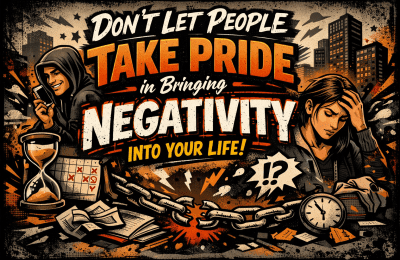
Some people don’t communicate — they dominate. They overtalk. They interrupt. They insert themselves into conversations that had nothing to do with them. You ask a question to one person, and somehow they’re already halfway through an answer nobody asked for. Loudmouth partners like this don’t just talk too much — they drain energy, hijack focus, and poison momentum.
Let’s be honest: these people suck ass.
And the worst part? Half the time they’re not even trying to be helpful. They’re trying to be noticed.
Loudmouths Aren’t Confident — They’re Insecure
People who constantly talk over others are rarely strong communicators. They’re insecure reactors. They speak before thinking. They interrupt because silence makes them uncomfortable. They insert themselves because being ignored feels like a threat to their identity.
So they manufacture relevance.
They say shit just to spark a reaction.
They poke at topics they know will irritate you.
They interrupt moments that don’t involve them.
Not because they have something valuable to add — but because they need engagement.
Once you see that, the behavior stops feeling personal. It’s not about you. It’s about their inability to sit quietly with themselves.
Attention Is the Currency — Stop Paying It
Here’s the part most people miss: every reaction feeds them.
Arguing feeds them.
Correcting them feeds them.
Explaining yourself feeds them.
Even eye contact can feed them.
Loudmouths thrive on friction. They want you to respond. They want the back-and-forth. They want proof that they still matter in the room.
The fastest way to shut them up?
Don’t engage.
Silence isn’t weakness — it’s starvation.
When you stop reacting, stop responding, stop acknowledging the bait, their behavior loses oxygen. And without oxygen, noise dies.
Reclaiming the Conversation Without Escalation
You don’t need to yell.
You don’t need to insult.
You don’t need to match their volume.
You need clarity.
Simple phrases, delivered calmly, end most interruptions immediately:
- “I wasn’t asking you.”
- “I’ve got it.”
- “Let them answer.”
- “Hold on — I want to hear them finish.”
No emotion. No explanation. Just boundaries.
Loudmouths rely on social politeness to keep talking. When you remove that permission, they short-circuit.
Why It Feels Better When They’re Gone
Let’s call it what it is: peace is addictive.
When they’re asleep.
When they’re not present.
When the room finally goes quiet.
That relief you feel? That’s your nervous system recovering.
Constant interruption puts the brain in defense mode. You’re always bracing. Always preparing to be cut off. Always expecting noise. When the loudmouth disappears, your mind finally gets space to breathe.
That feeling isn’t petty. It’s information.
Your body is telling you who disrupts your clarity.
Stop Explaining Yourself to People Who Don’t Listen
One of the biggest traps is trying to “make them understand.”
They understand just fine.
They just don’t care.
People who overtalk aren’t missing information — they’re missing restraint. Explaining your frustration gives them more content to hijack. More angles to debate. More chances to center themselves.
You don’t owe them understanding.
You don’t owe them patience.
You don’t owe them access to your thoughts.
You owe yourself peace.
Choose Distance When Respect Is Absent
Not everyone deserves proximity.
If someone repeatedly disrespects conversations, ignores social cues, and disrupts communication, that’s not a personality quirk — it’s a boundary violation.
Sometimes the solution isn’t confrontation.
It’s distance.
Less time.
Less access.
Less emotional availability.
And when that distance brings relief instead of guilt, you have your answer.
Silence Is a Statement
You don’t need to announce your withdrawal.
You don’t need to justify your boundaries.
You don’t need to win the argument.
Silence is the loudest message you can send to someone addicted to noise.
And when they finally shut the fuck up — whether by choice or by absence — protect that quiet like it’s sacred.
Because it is.