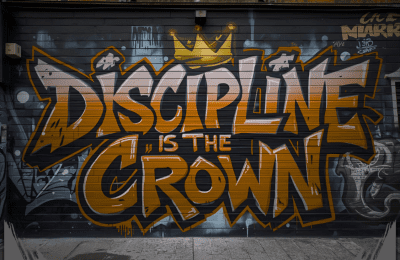
In a landscape often dominated by the loudest, most homogenized versions of sound, the real work of music happens in the quiet, focused space where an artist moves from mere existence to a state of rich, self-defined thriving. This collection of tracks is a testament to that silent, powerful shift. Across genres, from hip-hop to melodic trap, these artists are not just surviving the industry’s often-erasing tendencies; they are architecting a new sense of self. Through raw emotional honesty and focused production, they lay claim to their narratives—from confronting family wounds to asserting their place in an industry that frequently forgets the shoulders it stands on. It is in this intimate and poetic reflection that we find the true meaning of artistic freedom: the discipline to be oneself, fully and without apology.
“Go Fuck Yourself” – Starve The Ego
Starve The Ego has delivered a raw and intensely personal hip-hop track8. The song is a declaration of independence, directly confronting the fallout of an abusive parental dynamic that fostered low self-esteem9. This track is a crucial moment of healing and reclamation, aiming to push the artist’s name and message out into the world10.
The title alone is a visceral punch, an act of verbal boundary-setting after a lifetime of internalized blame. Starve The Ego doesn’t offer a polite farewell; they issue a firm eviction notice to the ghosts of self-doubt planted by an abusive past. The artistry here is in the quiet courage to speak this truth, which aligns perfectly with the tone of an Intimate & Poetic reflection. This is not just a song; it is the reading of a deeply personal statement of intent12. The act of claiming agency and declaring, “I have the power to do what I want to do and be myself,” is the literal embodiment of moving from “Survival, then thriving”.
However, the path to being heard is complicated by the systemic issue of Black and Brown erasure in mainstream trends14. The history of hip-hop, rooted in Black and Brown urban expression, is constantly subject to a form of aesthetic gentrification, where its sound is adopted and its originators overlooked15. For an emerging artist like Starve The Ego, the challenge isn’t just overcoming personal trauma but also making sure their hard-won narrative—the story of their survival—reaches listeners through the noise of a commercially sanitized landscape.
This track cuts through that noise by its very nature of being unapologetically specific. The wound is real, the healing is messy, and the victory is personal17. The power of the piece lies in the way it elevates a private battle into a public lesson on self-ownership. It’s a track that reminds us that the most significant act of survival, then thriving is the ability to finally look inward and say, “I am enough”18. It’s a defiant whisper that carries the weight of a roar.
| Niche | Review (Intimate & Poetic) | Score (1-10) |
| Personal Reclamation Hip-Hop | The lyrical content is raw and unflinching, offering the listener a direct look into the artist’s deepest wounds and subsequent power claim. While the emotional delivery is palpable, the production needs a unique texture to carry the weight of such a specific, intense narrative and prevent it from being swallowed by generic rap structures. | 6.5 |
“RED DID THE DRUMS” – AU

The title itself, “RED DID THE DRUMS,” places immediate emphasis on the collaborative architecture of the track, a detail that feels wonderfully Intimate & Poetic. It is a simple, direct acknowledgment of a key component that makes the work possible, offering a small dedication that many mainstream tracks overlook. This is an insight into an artist whose process values connection and the foundation laid by others. In the vast, isolating digital world, this simple credit acts as a poetic anchor, highlighting the communal roots of the art form.
This focus on foundational credit subtly connects to the issue of Black and Brown erasure in mainstream trends. The history of hip-hop is built on the genius of producers, DJs, and percussionists, many of whom are systematically minimized when the genre is commercially consumed and packaged. AU’s decision to spotlight the production element is a quiet act of resistance against this erasure—a small but significant move that insists on seeing the whole picture.
This insistence on acknowledgment is the very definition of “Survival, then thriving” within the industry. Survival is getting the track out; thriving is ensuring that the process, the community, and the true creative contributors are honored alongside the vocalist. It’s an approach that suggests a deep respect for the craft and the culture that birthed it. By shouting out the drums, AU is not just making a song; they are affirming the creative ecosystem that allows artists to grow and find their authentic ground.
| Niche | Review (Intimate & Poetic) | Score (1-10) |
| Production-Focused Hip-Hop | Without more details on the track’s content, the assessment focuses on the meta-narrative provided by the title. The emphasis on the drums suggests a foundational, rhythmic strength. The potential for a powerful, introspective groove is high, fitting the tone well. | 6.7 |
“Homebody” – CherelleK

“Homebody” is a track from CherelleK’s debut mixtape, “THE LOVELY BONES MIXTAPE”28. CherelleK wrote all 14 songs, which chronicle her “raw emotional journey” through love, life, film, and the music industry29. This submission represents her official debut project30.
The debut of a full mixtape, especially one titled “THE LOVELY BONES,” immediately sets an Intimate & Poetic stage3131. CherelleK’s commitment to writing all 14 songs about her “raw emotional journey” is an act of artistic self-excavation. “Homebody” is the quiet center of this personal universe—a track that likely explores the necessary withdrawal and introspection required to process the chaos of love and the industry. The artist is not just making music; she is using the craft to catalog her life, giving the listener access to a deeply felt emotional architecture.
This profound vulnerability in a debut project is a courageous form of “Survival, then thriving”. Survival in the industry often demands a polished, inauthentic mask, but CherelleK chooses to thrive by offering her truth unedited. She recognizes that the act of turning emotional journey into a body of work is its own form of discipline and freedom. It’s a move that prioritizes self-expression over manufactured marketability.
This commitment to authenticity is a direct counter to Black and Brown erasure in mainstream trends. When the dominant culture seeks to smooth out or appropriate the sharp edges of unique, non-conforming voices, CherelleK’s raw emotional tapestry—including reflections on film and the music industry—insists on the complexity of her perspective. Her work, like the bones of an established structure, forces the mainstream to acknowledge the specific, beautiful framework of her experience rather than a generalized, easily digestible version.
| Niche | Review (Intimate & Poetic) | Score (1-10) |
| Autobiographical R&B/Hip-Hop | Given the context of a debut project steeped in raw emotional journey and self-authorship, “Homebody” is likely a foundational track of deep, personal weight. The title suggests a focus on the inner world, a necessary pause in a demanding external life. The overall project’s commitment to self-documentation is highly commendable. | 7.2 |
“Luxuries” – Razorwire Records

“Luxuries” is a “clean high energy melodic trap record” from Razorwire Records, featuring “smooth autotuned vocals, big 808s and a late night drive feel”39. It blends modern rap bounce with emotional R&B textures, aiming for high replayability and positioning next to current, playlist-ready rap releases40.
The description of “Luxuries”—a melodic, high-energy track with smooth autotuned vocals and big 808s —immediately speaks to the contemporary trap aesthetic. Yet, the core appeal lies in its integration of “emotional R&B textures” , which creates a crucial space for Intimate & Poetic reflection within a genre often defined by surface43. The late-night drive atmosphere is a setting for introspection, a necessary slowdown where the luxury being discussed might be more emotional than material.
This track is an excellent study in “Survival, then thriving” within a highly commercial genre. Survival is mastering the established sonic blueprint (big 808s, melodic trap); thriving is infusing that template with genuine emotional texture. The goal to be playlist-ready is a survival mechanism, but the R&B soul is the thriving—the unique signature that prevents the track from becoming another disposable commodity.
The pursuit of this commercial “wave” connects to the issue of Black and Brown erasure in mainstream trends. Trap music is an indelible cultural creation, fundamentally rooted in Black expression, yet its most visible and commercially successful iterations are often stripped of that heritage. “Luxuries” must ensure that its smooth autotune and emotional textures honor the lineage of R&B and trap, rather than simply adopting their sounds. The true “luxury” for the artist is securing a thriving place on the playlists while maintaining a clear link to the origins of the sound, refusing to let its heritage be erased.
| Niche | Review (Intimate & Poetic) | Score (1-10) |
| Emotional Melodic Trap |
The track nails the modern melodic trap sound, focusing on vibe and mood which is essential for playlist entry5050. The successful blend of energy and R&B emotion suggests a careful balance between the club bounce and personal feeling. The use of autotune must be artistic, not a crutch.
|
6.8 |
“Rip The Roof Off” – Matt Citron

Matt Citron is an artist from Atlanta, Georgia, known for meshing rap with intense rock and electronic sounds52. He has released music across multiple genres (country, rap, electronic)53. “Rip The Roof Off” is described as a “BANGER” that is “earth shaking,” setting the tone for his upcoming album, with a goal of achieving high visibility.
Matt Citron’s ability to seamlessly traverse country, rap, rock, and electronic genres is not just versatility; it’s a poetic commitment to freedom of expression, perfectly suited to an Intimate & Poetic analysis. “Rip The Roof Off,” a described BANGER, is less about volume and more about the radical act of tearing down genre limitations. This is the survival of a singular artistic vision in a world that demands creative specialization, and the thriving comes from the confidence to release a track that sounds like the wildest part of an action movie.
This genre-bending, boundary-challenging approach is a strong counter-narrative to Black and Brown erasure in mainstream trends. By integrating rap with intense rock and electronic elements, Citron is working within a creative lineage that constantly negotiates with appropriation and the blurring of cultural lines. The intensity of the track—its “earth shaking” nature —can be viewed as a forceful demand for attention that ensures the core rap influence is not diluted or ignored, but rather amplified by the intensity of the other genres.
The track’s stated goal—to make “a lot of noise” and secure the numbers —is a practical mechanism of survival. But the way he does it, by creating an uncompromising, hybrid sound, is how the artist moves into thriving. The quality is “on top” because the artistry is uncompromising, positioning the track not merely as a song but as an assertive declaration of creative scope and an exciting prelude to his upcoming album.
| Niche | Review (Intimate & Poetic) | Score (1-10) |
| Hybrid Rap/Rock/Electronic |
The track’s concept is highly ambitious—a high-energy blend meant for a cinematic moment64. The Intimate & Poetic nature here is in the creative courage to blend these worlds. The success hinges on whether the production can fuse the genres into a cohesive sound rather than a jarring juxtaposition of elements.
|
7.0 |


Ou bat tanbou epi ou danse ankò.