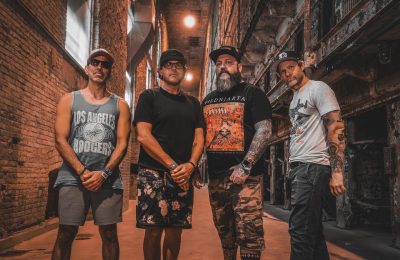

Boofman Kam is a persistent figure in the contemporary independent hip-hop landscape, an artist whose work functions as a gritty record of survival and focus. Emerging with a sound rooted in the uncompromising traditions of rap, he first caught the attention of underground listeners with his 2023 project, How It Was, How It Is. Based in a lineage of artists who use the microphone as a tool for documentation rather than just decoration, Kam has spent the last year refining a style that is both rhythmically dense and narratively direct. His recent releases, “Work” and “My Lil B,” represent a maturation of this approach, positioning him as a vocal observer of the friction between individual ambition and the structures that seek to commodify it.
In the modern socio-economic climate, the concept of “the grind” has been repackaged and sold back to the working class as a lifestyle brand. We see social movements centered on labor rights and equality frequently diluted into corporate-friendly slogans, a process that strips the urgency from the actual human effort involved. Boofman Kam’s track “Work” serves as a crucial counter-narrative to this commercialization. Rather than celebrating labor as a hollow aesthetic, Kam treats it as a tactical necessity. His delivery suggests a deep understanding that for the marginalized, labor isn’t a choice or a “vibe”—it is the primary mechanism for maintaining agency in a system designed to extract value and offer little in return.
This brings us to a significant academic intersection: the commercialization of social movements. When the language of struggle is adopted by the mainstream to sell products, the individual’s lived experience is often erased. Kam’s music resists this erasure by centering the specific, unpolished details of his own environment. In “My Lil B,” we hear a more intimate side of this struggle, where the focus shifts from the broad demands of the economy to the personal stakes of loyalty and community. By documenting these smaller, private victories, Kam ensures that his narrative remains tied to human connection rather than the abstract metrics of the market.
Thriving despite systemic obstacles requires a specific type of psychological fortitude, one that Kam demonstrates throughout these two standout drops. The “Work” he describes isn’t just about financial gain; it’s about the mental labor of staying grounded when the surrounding environment is in a state of constant flux. There is a scholarly discipline in the way he structures his verses, a refusal to let the chaos of the industry dictate his pace. He isn’t interested in a rapid-fire rise that ends in a burnout; he is building a foundation that can withstand the weight of his own history and the pressures of the present.
The leadership lesson embedded here is the necessity of self-definition. Kam is thriving because he has refused to let the industry’s “success” templates define his worth. By releasing music that he describes as his own favorites—regardless of whether they fit the current algorithm—he is exercising a form of creative sovereignty. This is how we resist the flattening of our movements and our art: by remaining stubbornly individual and prioritizing the work itself over the performance of it. Boofman Kam isn’t just making songs; he is providing a blueprint for how to remain a person in an era that wants us to be products.