

The career of Tracey Stevens, who goes by Blue Flame Hughes, is not cut out of fame overnight on the internet, but a gradual, intentional slogging that was cut into the ground of Texas. Hughes was born in Galveston, found his first sense of stability in Beaumont, and, finally, grew into manhood on the streets of San Antonio, so his identity is directly connected to the areas he lived in. He makes no secret of the fact that it is here where he studied that home is where the heart is, and he puts every number of his lyrics into the memories acquired in these diverse landscapes. This is not mere stereophonic ambiance, but the basis rock of his art. His artistic heritage goes further than the typical hip-hop influences as he guides us back to the mighty poetry of Langston Hughes, whose work influenced the cadence and philosophizing writing of Stevens way before he entered a booth. Although contemporaries such as J. Cole, Wale, and Mac Miller are offering a new roadmap to the world of combining lyrical richness with versatility, the way Hughes did it was unique, roaming, and incredibly personal. He has been practicing this trade since he was in middle school, and he perceives his product not as entertainment but as written art as a development of pain and experience in life.
The 118 Theory, published on November 8, 2025, comes as an important work of art, after a consistent influx of releases, such as the 2024 4 Zips – EP and its thematically related prequel, The 811 Theory. The artist calls this fifteen track project a contemporary testament of power in the face of a reality that he could hardly describe as being dreamlike. It is a thick, forty-four-minute immersion into a mind that was struggling vigorously towards alignment on spiritual and mental realms. Hughes is not keen on romanticizing the tragedy that has befallen him, but rather, he is concerned with the strength one needs to discard the old ways of doing things, get rid of the inherent fears and break the connection with the dark side in order to devote wholly to his potential. The album is a beckon to the audience to associate themselves with a story of self-discovery and triumph in order to make comparisons about their own lives in his self-discovery.
The 118 Theory is barkingly and painstakingly frank and straight, a ride across the multifaceted nexus of hip-hop bravado and naked self-exploration. In the genre ecosystem that tends to push the artists towards a monolithic display of invincibility, Hughes courageously addresses the issue of mental warfare. This will be a direct response to the current problem of mental health stigma in the arts, specifically in hip-hop. Such artists as Fear (The Face Off) imply a dialogue within that most people are afraid to speak because of the norms in the industry. Hughes is not merely rapping about the grind; he is digging the psychological cost of the grind and the shadow work that needs to be done to keep him sane as he goes after a dream. He takes the opportunity to underscore faith and perseverance as lifelines, not merely means of material acquisition by putting himself in a position to speak on behalf of the voiceless and marginalized. His music represents a counter-story to popular tendencies which usually bleach the delicate struggles of Black and Brown artists and instead provides a more down-to-earth approach to how to make it through the confusion.

The 118 Theory is barkingly and painstakingly frank and straight, a ride across the multifaceted nexus of hip-hop bravado and naked self-exploration. In the genre ecosystem that tends to push the artists towards a monolithic display of invincibility, Hughes courageously addresses the issue of mental warfare. This will be a direct response to the current problem of mental health stigma in the arts, specifically in hip-hop. Such artists as Fear (The Face Off) imply a dialogue within that most people are afraid to speak because of the norms in the industry. Hughes is not merely rapping about the grind; he is digging the psychological cost of the grind and the shadow work that needs to be done to keep him sane as he goes after a dream. He takes the opportunity to underscore faith and perseverance as lifelines, not merely means of material acquisition by putting himself in a position to speak on behalf of the voiceless and marginalized. His music represents a counter-story to popular tendencies which usually bleach the delicate struggles of Black and Brown artists and instead provides a more down-to-earth approach to how to make it through the confusion.
The general leadership message incorporated to the DNA of the album is the idea of the healing power in creativity. The construction of The 118 Theory in itself seems to represent the mechanism through which Hughes digests his unfathomable number of hard decision choices, miseries, and the multiple torrents of love. He shows that the main duty of the artist lies in the truth, and that truth even when unpleasant. In Pull Up and in Big General we discover the confidence of a man who has done the work. He does not need outer approval since he has discovered inner “Alignment”–the name of the 11 th track of the album. This riff, which finishes on “Alignment” and then transitions to “Heights” and finally to “Standing Ovation (Outro) is a sonic arc of upward movement.
It is hard to overestimate the literary impact of Langston Hughes. Similar to the Harlem Renaissance giant, Blue Flames Hughes employs the “blues not as a platform of despair, but as a stairway. His poems usually reflect the AAB structure of the classical blues poetry, reinterpreted in the trap era. The purest kind of grace and love he discovers is in the everyday ordeal of the move–of the coastal atmosphere of Galveston to the steamy streets of Beaumont. His nomadic past has taught him that home is a portable internal condition, and it rings quite well in Coming Home, the twelfth song of the album. This feeling of belonging to self is the Theory the title implies; it is the assumption that self-love is the only fuel that is sustainable enough to power greatness.
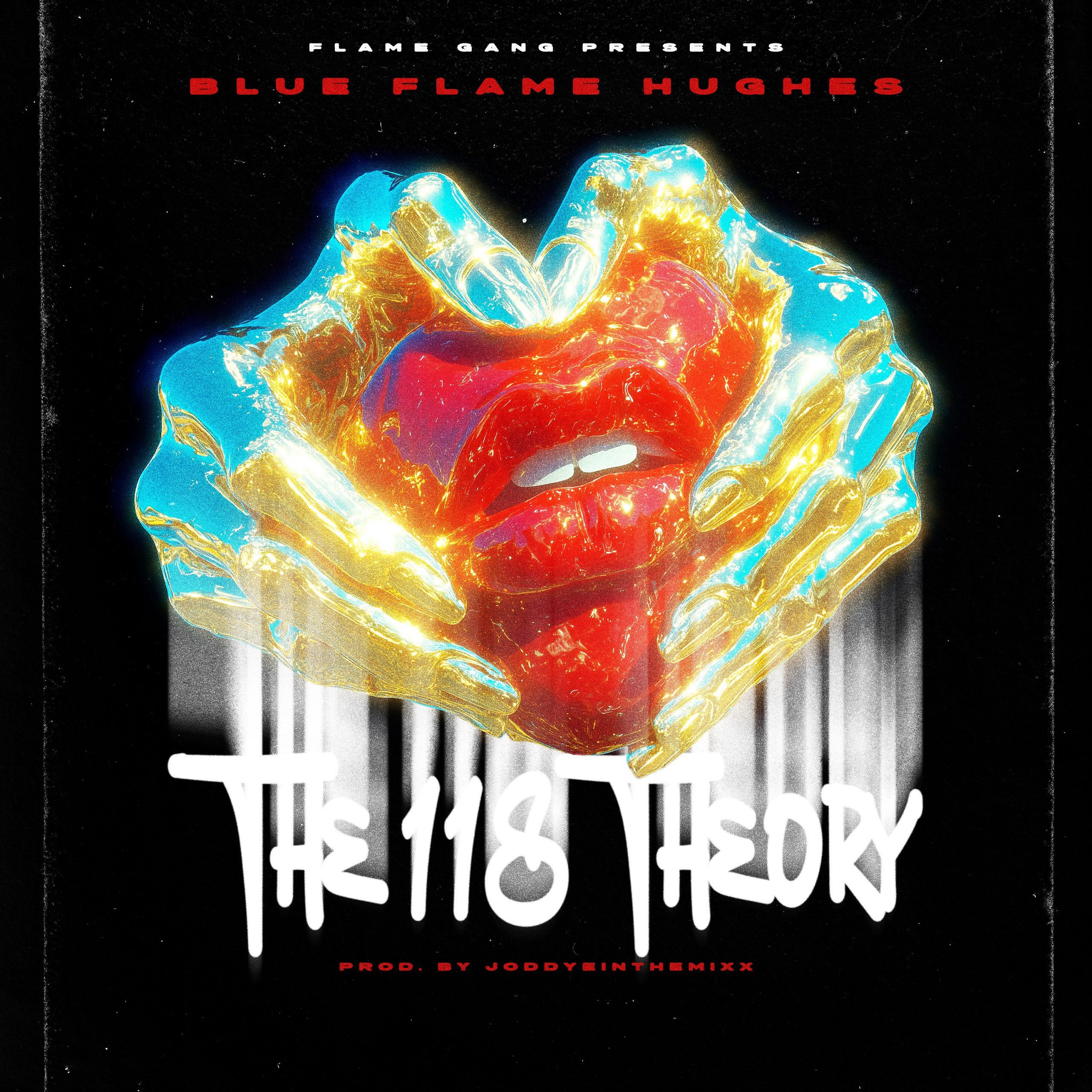
Also, the project undermines the myth of the independent hustle by demonstrating how much discipline it takes to produce such a high output. After putting out three major projects within three years (Sweet Sensations in 2022, 4 Zips in 2024, and both 811 and 118 in 2025), Hughes is working incredibly prolifically. This implies a business, SEO savvy market saturation that does not compromise the writing of the Upper Crust. He is shaping his own legacy, being his own curator and making sure that his movement is not based on a foundation of flimsy, off-the-record art but on a foundation of sturdy, provable art.
In the end, Blue Flame Hughes has provided a project which cannot be ignored with such gimmicks and glamour, but simply because of its sincerity. He is a creator devoted to creating a legacy and a movement which shows an entrepreneurial mind that is self driven and would put emphasis more on organical artistic development rather than strict development schedules in the industry. The 118 Theory is the voice of an artist who has discovered that turning pain into a step to become better is the greatest winning battle and he is kind enough to share that blueprint with any person who is ready to hear. This album is his official statement of independence and he is the Big General of his destiny.
The way Hughes blends the poetic sensibilities of the Harlem Renaissance with the grit of Texas trap is genuinely refreshing. While the sonic foundation is recognizable, the “nomadic” perspective—shifting between Galveston, Beaumont, and San Antonio—gives the narrative a geographic texture that most albums lack.
The wordplay is intentional, and the themes are cohesive. Hughes avoids “filler” bars, choosing instead to pack every verse with either a motivational gem or a piece of his personal history. His ability to articulate the “shadow work” of mental health is top-tier.
The beats are crisp and modern, providing a professional canvas for his flows. The transition between high-energy anthems like “The Tone” and introspective tracks like “Alignment” is handled with technical precision, maintaining a consistent atmosphere throughout the 44-minute runtime.
Hughes possesses a commanding presence on the mic. His voice carries the weight of his experiences, and his “Flow State” is aptly named. He shows great chemistry with his features, particularly Yung Joddye, whose contributions feel like natural extensions of the album’s energy.
The core mission of the album—to act as a motivator for the voiceless—is achieved. It is a rare project that feels equally at home in a gym, a car, or a meditation session. The emphasis on faith and resilience is the heartbeat of the record.