
Every masterpiece ever pressed to wax relies on a fundamental, undeniable law of physics and art: space. If you crowd the track, if you let the bass bleed too heavily into the mids, if you let the snare drum crash over the vocals without a gate to keep it in check, you don’t get a symphony. You get noise. You get chaos. You get a frequency so distorted it becomes impossible to listen to, let alone dance to.
Relationships are no different. They are the ultimate collaborative album. But somewhere along the line, we were sold a bootleg narrative about what love, loyalty, and connection are supposed to sound like. We were told that true love means tearing down all the walls. We were conditioned to believe that the ultimate expression of commitment is a complete, unmitigated merging of two souls until you can’t tell where one person ends and the other begins.
Culturally, we’ve romanticized the blur. We celebrate the “ride or die,” the martyr, the one who sacrifices their own oxygen so their partner can breathe. But let me tell you something I’ve learned from decades of watching systems—from neighborhood blocks to county lockups, from the soundboard to the social sciences—when you erase the lines of where you end and someone else begins, you aren’t building a sanctuary. You’re building a trap.
Setting healthy boundaries isn’t about keeping people out. It’s about protecting the equipment. It’s about ensuring the bassline of your own spirit stays intact so the duet can actually thrive. It’s time we rewrite the liner notes of love and learn how to hold our space without losing our soul.

The Social Science of the Sacrifice
Before we can build, we have to understand the rubble we are standing on. Why is it so incredibly difficult for us to draw a line in the sand and say, “This far, and no further”?
The answer is deeply woven into our social fabric, especially within communities that have had to survive on the margins. When the world outside your door is hostile—when systemic pressures, economic disparity, and societal marginalization are beating down your door—the instinct is to huddle close. The collective becomes the shield. In these environments, individual boundaries can feel like a betrayal to the tribe. If you’ve been raised in a system that demands you give everything you have just to survive, the idea of keeping something for yourself feels selfish. It feels like a luxury you haven’t earned.
But this is a dangerous miscalculation of power.
Think about the criminal justice system for a moment. It is a system historically predicated on the total removal of boundaries and autonomy. It strips the individual down to a number, dictating when they sleep, when they eat, and how they exist, all under the guise of “order.” When we fail to set boundaries in our personal lives, we subconsciously recreate a micro-version of this carceral state in our own living rooms. We become wardens of our partners’ emotions, or inmates to their demands. We police their moods, or we allow our own time and energy to be confiscated without a warrant.
A relationship devoid of boundaries isn’t a safe house; it’s a holding cell. Real love, true restorative justice in an intimate space, requires two free individuals who choose to walk alongside each other, not two hostages tied together at the ankle.
The Architecture of a Boundary: Gates, Not Walls
When I talk about boundaries, people often envision a brick wall. They imagine emotional barbed wire, a defensive posture designed to keep the world at bay. That’s a trauma response, not a boundary.
A wall is static. A wall is blind. A wall keeps the enemy out, but it also blocks the sunlight, the breeze, and the melody of the neighborhood.
A healthy boundary, on the other hand, is a gate. And a gate has a hinge. A gate implies ownership of the property, but it also implies agency. You have the power to swing it wide open when the company is good, to leave it on the latch for the people you trust, and to lock it dead when the storm rolls in. You are the architect of your own emotional estate.
To build this gate, we have to borrow from the principles of spoken word. Poetry is all about precision. You don’t waste syllables. You say exactly what you mean, with intention, rhythm, and clarity. A boundary is the poetry of self-respect. It is the articulation of your needs, spoken out loud, so that the person across from you doesn’t have to guess the cadence of your heart.
When you don’t speak your boundaries, you force the people you love to walk through your life in the dark, bumping into the furniture, breaking your delicate things, not because they are malicious, but because you never turned on the lights. Resentment is the heavy, suffocating silence that fills the room when a boundary should have been spoken.
Deconstructing the “Ride or Die”
Let’s take a magnifying glass to the culture for a second. Hip-hop, in all its brilliance, has sometimes handed us a flawed script when it comes to relational loyalty. The trope of the “ride or die”—the partner who will endure any hardship, tolerate any disrespect, and weather any storm of toxicity just to prove their loyalty—is a myth that bankrupts our emotional economy.
There is a profound difference between being a supportive partner and being a crash test dummy.
Being “down for whatever” sounds poetic over a boom-bap beat, but in real life, “whatever” often includes emotional neglect, verbal abuse, or the slow erosion of your peace of mind. Loyalty that requires you to sacrifice your self-respect isn’t loyalty at all; it’s exploitation dressed up in a gold chain.
Healthy boundaries require us to redefine what it means to be a loyal partner. True loyalty is saying: “I love you enough to tell you no.” It is saying, “I am committed to us, which means I cannot allow you to treat me in a way that will eventually make me hate you.”
The Actionable Gem: The “If/Then” Frequency
So, how do we do it? How do we take the theory and put it onto the turntables? How do we set these boundaries without sounding like we are handing down an indictment?
The secret lies in shifting your language from control to consequence.
Most people fail at boundaries because they try to use them to control the other person. “You can’t talk to me like that.”“You need to stop working so late.” “You have to help out more.”
When you tell someone what they can or cannot do, you are issuing a command. Human nature, especially for those of us who have spent our lives resisting authority, will instinctually rebel against a command.
Instead, a true boundary focuses on what you will do. This is what I call the “If/Then Frequency.” It’s an actionable, repeatable gem you can carry in your pocket starting today.
A boundary is an equation: If [X occurs], Then [I will take Y action to protect myself].
- Instead of: “Stop yelling at me.”
- The Boundary: “If voices get raised in this argument, then I am going to step out of the room for twenty minutes so we can cool down.”
- Instead of: “You always bail on our plans, you need to be more reliable.”
- The Boundary: “If you are more than thirty minutes late without a text, then I am going to go ahead and eat without you so my evening isn’t ruined.”
- Instead of: “You can’t dump all your work stress on me the second I walk in the door.”
- The Boundary: “If we are going to talk about heavy work issues, then I need thirty minutes to decompress first, otherwise I don’t have the bandwidth to truly listen to you.”
Notice the rhythm? There is no attack. There is no character assassination. There is just a clear, unwavering statement of cause and effect. You are not policing their behavior; you are simply stating the terms of your own engagement. You are protecting the equipment.
Surviving the Pushback: When the Beat Drops
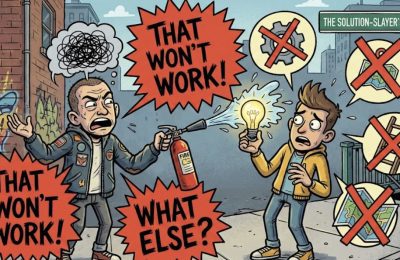
Here is the hard truth, the raw, unfiltered reality of this work: When you first start setting boundaries, the people who have benefited from your lack of them are going to be upset.
The beat is going to drop, and it’s going to sound discordant. They will call you selfish. They will say you’ve changed. They might try to guilt-trip you, spinning the narrative to make you the villain. This is the pushback, and it is entirely predictable.
When you’ve played a specific role in someone’s life for years—the fixer, the shock absorber, the endless well of patience—and you suddenly resign from that position, the system goes into shock.
Do not fold. Do not drop the mic.
This friction isn’t a sign that your boundary is wrong; it is proof that the boundary was desperately needed. The pushback is just the sound of a dysfunctional dynamic trying to fight for its life. Let it fight. Your job is to stand still in the truth of your own worth. Hold the line with grace, without needing to match their volume.
In my years of studying social dynamics, I’ve seen that systems eventually recalibrate. When you hold a boundary consistently, without malice but with unbreakable firmness, the people who truly love you will eventually learn the new choreography. They will learn where the gate is, how to knock, and how to respect the space.
And for those who refuse to adjust? For those who decide that they only want you if they can consume you? Well, that is a revelation disguised as a rejection. The boundary did its job. It kept the trespassers out of the sanctuary.
The Outro: The Beauty of the Whole
We set boundaries not because we are afraid of love, but because we revere it.
We want a love that is rooted in choice, not obligation. A love where both people are whole, bringing their full, unfiltered, unapologetic selves to the table, without the fear of being swallowed alive.
When you have the courage to draw these lines, something beautiful happens. The resentment fades. The passive-aggression dissolves. The anxiety that sits tight in your chest begins to loosen. You stop trying to manage the unmanageable, and you finally have the energy to just be.
To love fiercely and boundlessly doesn’t mean you lack parameters. It means your parameters are so secure, so well-crafted, and so deeply respected, that you are finally safe enough to surrender to the music.
So check your levels. Adjust your sliders. Build your gates. And remember: You are the author of your own liner notes. Make sure they tell the story of a life that is respected, protected, and beautifully your own.