
For the Waffle Fam audience, this batch of tracks speaks to the duality of music as both refuge and frontline. Some songs call you to fight (whether politically or personally), others invite you to feel, to connect, or to stretch beyond language.
1. The Young Yay — Smirk 4 Kirk
🧇 Waffle Score: 4 🧇
Radar:
Smirk 4 Kirk was released on September 15, 2025 via SoundCloud.
The track is listed among The Young Yay’s singles on Apple Music; it is one of his latest releases.
Media coverage frames it as a protest song confronting censorship and injustice, calling it a “raw cry against silence in the face of oppression.”
In the song’s description, The Young Yay writes that Kirk was a figure of hate (racism, homophobia) and expresses that his death is ironic given his own advocacy of gun violence.
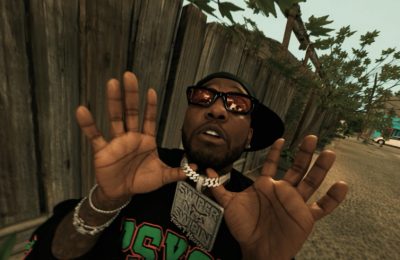
“Smirk 4 Kirk” is bold by nature, not tentative. The Young Yay positions it as a protest anthem—one that refuses to wait for correctness or comfort. The track’s power is in its emotional calculus: anger, irony, and the demand for speech over silence. He frames Kirk as a symbol—not just a person—of the systemic hatreds he stands against. The paradox of a man preaching violence falling by violence hangs heavy across the track.
Sonically, the track carries tension. It doesn’t soften its edge; the instrumentation supports the weight of the message. The Young Yay’s vocal tone is direct and unflinching, making statements rather than queries. That choice makes the track feel urgent—like a rally cry more than a song. For Waffle Fam, this kind of track is cathartic: it models how to turn outrage into art, demanding dialogue rather than retreat.
The reason it doesn’t land a full 5 waffles is that its political boldness may overshadow musical subtlety; moments of layering or contrast might get lost amid the messaging. But that’s also part of its identity: it’s built for confrontation, not background listening.
This track is more than protest—it’s an example. It teaches by doing. For those in the Waffle Fam who make, share, or support art with purpose, “Smirk 4 Kirk” is a reminder that music can still push boundaries and provoke thought. It’s not just sound — it’s stance.
2. Daps — Down Wit Dat (Cold Killa)

🧇 Waffle Score: 3 🧇
Radar:
Daps has Down Wit Dat (Cold Killa) listed as a single (2023) on Apple Music.
On Tidal, Down Wit Dat (Cold Killa) is among the artist’s top tracks.
This track leans into tough-guy bravado—gangster rap energy intended for playlists and radio rotation. It’s straightforward in its ambition: to be heard, to flex, to claim ground in the lane of street rap. While it may not attempt to reinvent sonic boundaries, it knows its purpose and plays to its strengths.
The production likely supports the lyrical delivery with weighty drums, assertive bass, and perhaps classic rap elements (hi-hats, punchy snares)—though I couldn’t locate deep production credits. Its accessibility is one of its merits: not overly experimental, which means it’s easier to slot into curated rap or hip-hop playlists that favor confident, assertive tracks.
For the Waffle audience, “Down Wit Dat (Cold Killa)” performs the role of assurance: sometimes what you need is a banger that affirms presence more than it asks questions. It’s solid, direct, and serviceable. It may not push the envelope, but it serves its lane well.
3. Oliver Wing — Against Entropy

🧇 Waffle Score: 4 🧇
Radar:
Against Entropy is the debut single from Oliver Wing, released in 2025.
The track runs 3:38 in length per the official listing.
Oliver Wing is described as a composer bridging film/symphonic sensibilities into more accessible music; he aims to blend rap, synth, and ethereal vocals.
On Spotify, Against Entropy is among his notable singles.
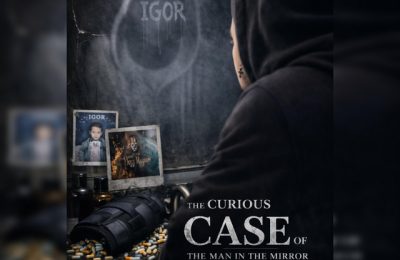
“Against Entropy” announces itself as something more than standard rap fare. The title alone evokes cosmic struggle—order vs. chaos—and the music aims to match that mood. You can hear the compositional heritage: there’s space built into the track, breathing room for texture and layering. The blend of rap verse, synth-driven soundscapes, and a haunting female chorus creates a cinematic quality that’s rare in mainstream rap.
Lyrically, the song leans into existential territory. It’s not about flexing or proving; it’s wrestling. The emotional center is resilience against decay, which feels universal. That gives the track weight beyond just technical prowess.
From the Waffle Fam perspective, this is a track to flag for forward thinkers—those wanting rap that meets ambition, not just swagger. It’s a bridge between genres, and because it doesn’t oversell its complexity, it stays listenable. If Oliver Wing continues in this direction while sharpening the edges (hooks, dynamics), he could be someone to watch.
4. VYBE — WYL

🧇 Waffle Score: 3 🧇
Radar:
VYBE is an artist from DC.
WYL is from his album Carte Blanche and features R.J. Casey (a Canadian artist).
The song is described by the artist as representing the pursuit of love and going all in on affection.
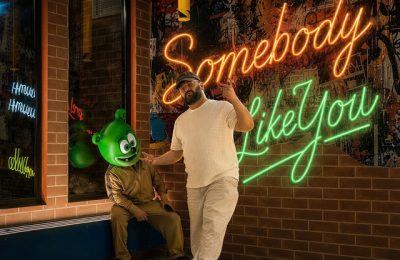
“WYL” occupies a romantic lane, different from many of the more protest- or existentially toned tracks here. Its mission is emotional honesty: “I’ll do whatever it takes” vibe. In a set of songs grappling with identity, struggle, and protest, “WYL” offers respite—a human moment focused on connection rather than conflict.
Musically, the track probably uses smoother melodic elements, maybe softer instrumentation or a more lush production palette to complement the romantic theme (though I couldn’t verify instrumentation details). Featuring R.J. Casey adds cross-border texture—a bridge between DC and Canadian scenes.
For Waffle Fam, “WYL” shows that vulnerability is strength. It reminds the audience that making music means holding both bold truth and delicate feeling. It doesn’t quite push as far as some of the heavier-hitter tracks here, but it’s valuable for balance—empathy in motion.
5. Kevin Nyam — Right 2 Wrong
🧇 Waffle Score: 3 🧇
Radar:
This is billed as a bilingual collab (English & French).
Kevin Nyam spans France / United States (so the cross-cultural element is built in).
“Right 2 Wrong” enters the cross-cultural space. The choice to mix English and French enables broader reach—especially in Francophone markets and among bilingual listeners. That kind of linguistic fluidity is valuable in the modern streaming landscape, where global listeners catch songs across languages.
Given the title, one might expect thematic tension: what is “right,” what is “wrong,” and how do those lines blur in culture, relationships, or personal morality. The dual-language format can amplify that ambiguity: sometimes truth is not absolute but contextual.
Musically, the risk is keeping cohesion across languages (melody, flow, instrumentation must tie everything together). I don’t have deep specifics about the beat, production credits, or reception, so my judgment leans more on concept than craft. As a first impression, the track is promising for its ambition rather than assured for flawless execution.
For Waffle Fam, “Right 2 Wrong” is a reminder that art can cross divides. It invites listeners to stretch their ears and accept multiplicity in voice and language. In a networked world, tracks like this can open doors to unexpected audiences.

Ou bat tanbou epi ou danse ankò.